
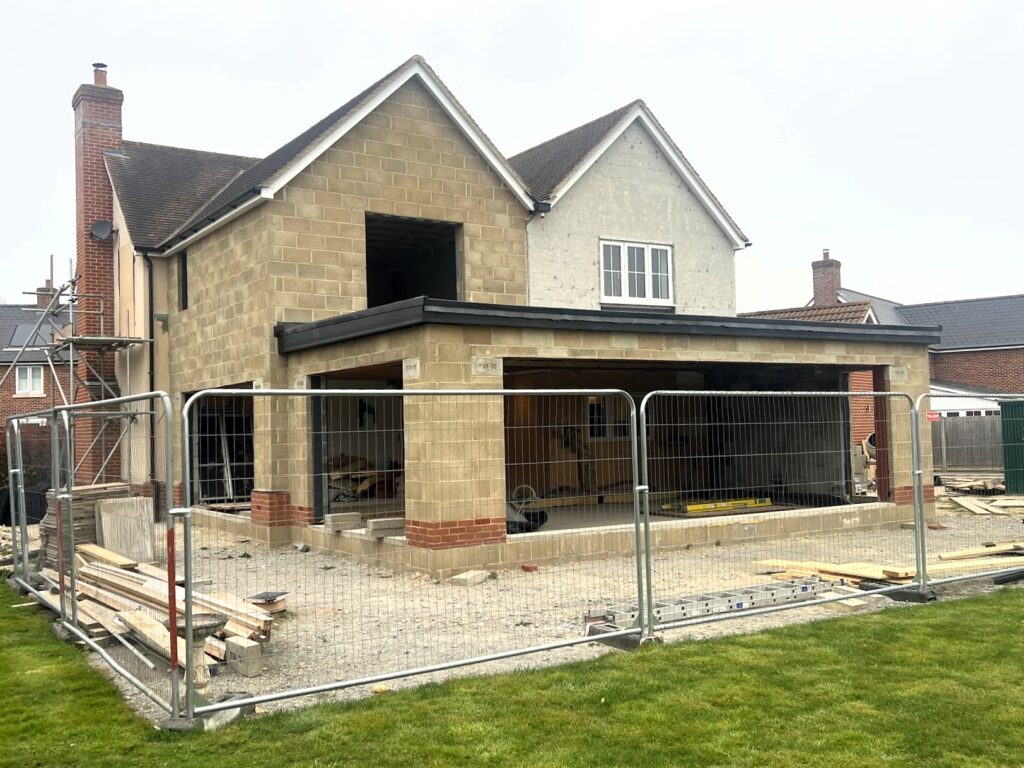
The complete first-week setup guide for domestic extensions, loft conversions and refurbs
Starting a small residential building job properly makes a bigger difference than most people realise.
Many domestic projects don’t run into trouble because of workmanship. They run into trouble because the site setup is rushed, incomplete, or treated as an afterthought.
This guide explains how experienced builders set up small residential building sites so work can progress smoothly, neighbours stay onside, and avoidable problems are dealt with before they arise.
Quick answer: what matters most on small residential sites
Good site setup on domestic building jobs is about access, welfare, sequencing and communication – not site size.
Even small extensions and loft conversions are construction sites. Sorting the basics early helps prevent complaints, delays, and unnecessary stress later.
What counts as a small residential building site?
For this guide, a small residential building site includes:
- House extensions
- Loft conversions
- Garage conversions
- Structural refurbishments
- Small domestic builds
Typically, these jobs involve:
- 2–6 people on site
- Tight or shared access
- A live residential environment
- Projects planned for weeks that often run longer
Even though these are domestic jobs, they are still working construction sites.
Step 1: Access, boundaries and working areas
Before any tools come out, it’s important to define:
- How people enter and leave the site
- Where materials will be stored
- Which areas are off-limits
Practical steps that help:
- Agree access routes with the homeowner in advance
- Protect paths, driveways and gardens
- Use barriers or fencing where possible to define work areas
Clear boundaries reduce misunderstandings and protect both the builder and the client.
Step 2: Site welfare (often underestimated)
Site welfare is one of the most commonly overlooked parts of domestic jobs.
Even on small residential projects, people on site still need:
- Somewhere to use the toilet
- Basic hand-washing facilities
- A place to take breaks away from the client’s home
Relying on household facilities often causes problems:
- Disruption to the household
- Awkward conversations later in the job
- Risk if access is withdrawn or restricted
Most experienced builders arrange basic welfare at the start of the job, rather than dealing with it once it becomes an issue.
Step 3: Skips, deliveries and material storage
Poor planning around skips and deliveries can cause daily frustration.
It helps to think through:
- Where skips will be positioned
- Whether permits are required
- How deliveries affect neighbours and access
- Where materials can be stored safely
A useful rule of thumb is to avoid ordering everything at once. Fewer, better-timed deliveries usually make sites easier to manage.
Step 4: Neighbours and working hours
Many domestic site problems start with neighbours rather than clients.
Simple steps make a big difference:
- Introduce yourself early where possible
- Stick to agreed working hours
- Keep pavements and access routes clear
- Avoid blocking driveways unnecessarily
A calm neighbour is often the difference between a smooth job and ongoing complaints.
Step 5: First-week sequencing
The first week sets the tone for the entire project.
A sensible first-week sequence often looks like:
- Confirm access and boundaries
- Set up basic welfare and storage
- Arrange skips and initial deliveries
- Carry out enabling or strip-out works
- Move into structural stages
Trying to rush past this setup to “save time” often leads to delays later.
Why small jobs still need proper setup
Small residential projects often:
- Run longer than planned
- Change scope mid-job
- Add extra trades
- Put pressure on access and space
What starts as a short job can quickly become a longer-running site.
Builders who plan for that reality tend to stay in control.
The difference between smooth jobs and stressful ones
Builders who:
- Set sites up properly
- Think ahead about access and welfare
- Plan for delays rather than assuming best case
Spend less time firefighting and more time getting work done.
That isn’t overkill. It’s experience.
What to read next
This guide is part of a wider series on running small residential building jobs properly.
Next in the series:
- Do You Need a Toilet on a Domestic Building Site?
- First Week Checklist for a House Extension or Loft Conversion
Each article focuses on practical realities builders face on domestic jobs, without unnecessary complication.