
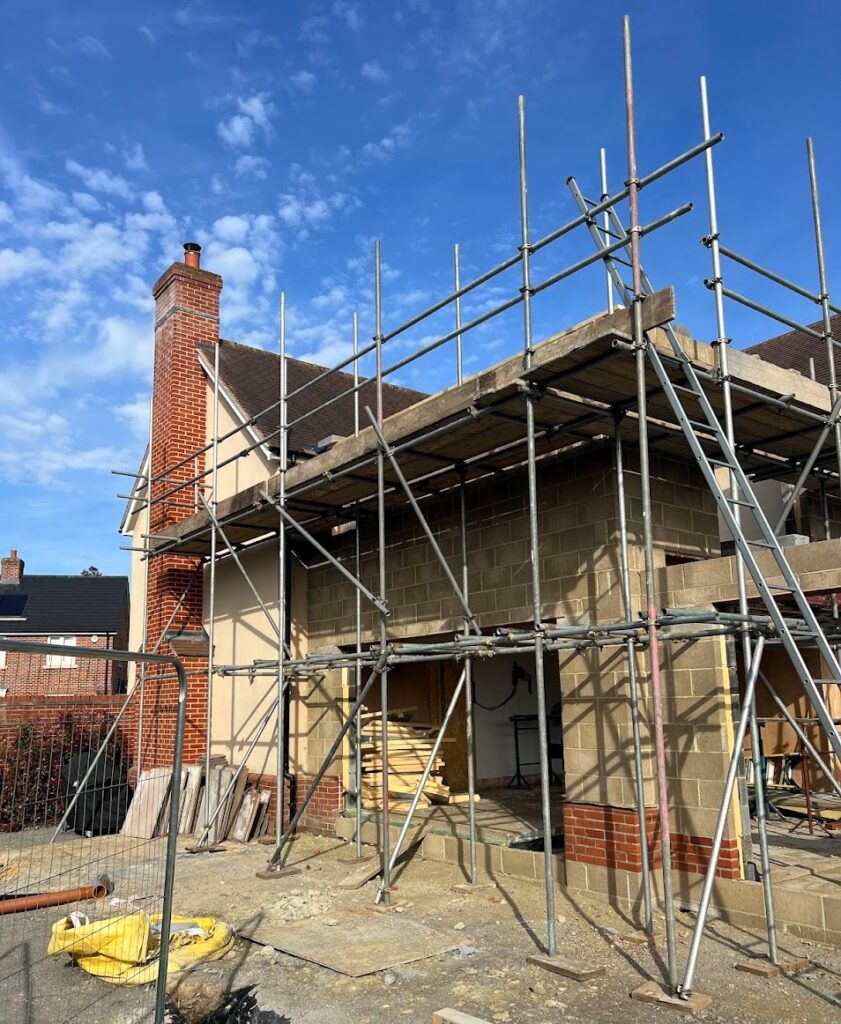
What the rules actually say for house extensions, loft conversions and small building jobs
This is one of the most common questions builders ask when starting a domestic job – and one of the most misunderstood.
On small residential projects, it’s easy to assume that site welfare rules only apply to large commercial sites. In reality, domestic building work is still construction work, and basic welfare expectations still apply.
This article explains, in plain English, when a toilet is required on a domestic building site, what the rules actually say, and what experienced builders do in practice.
This article explains whether builders need to provide a toilet on domestic building sites, including house extensions and loft conversions, and how experienced builders handle site welfare in practice.
Quick answer
Yes – in most cases, builders are expected to provide toilet facilities on domestic building sites.
Even on small jobs like house extensions and loft conversions, relying on the client’s toilet is rarely recommended and can create problems later in the project.
Why this question comes up so often
On domestic jobs, toilets are often treated as a grey area because:
- The site is small
- The client lives in the property
- The job may only involve a few people
As a result, builders sometimes rely on household facilities at the start of a job, assuming it will be fine.
In practice, this is where many problems begin.
What the rules actually say
UK health and safety guidance requires that adequate welfare facilities are provided for people working on construction sites.
That includes:
- Access to a toilet
- Hand-washing facilities
- Somewhere to take breaks away from the work area
These requirements apply to construction work – not to site size or project value.
A domestic extension or loft conversion is still classed as construction work.
Can builders use the client’s toilet instead?
In very limited circumstances, builders may be allowed to use household facilities, but this is often misunderstood.
In practice, relying on the client’s toilet creates several risks:
- Access can be withdrawn if relations become strained
- Disruption to the household
- Hygiene concerns
- Disagreements later in the job
Many homeowners are initially agreeable, then change their mind once work is underway.
For this reason, most experienced builders avoid relying on household toilets, especially on jobs expected to run for more than a few days.
When a toilet is effectively required on a domestic site
While every job is different, a toilet is generally expected where:
- The project runs longer than a few days
- More than one person is regularly on site
- Work affects access to the home
- The site is partially separated from the living space
House extensions, loft conversions and structural refurbishments usually fall into this category.
Can work be stopped if there’s no site welfare?
This is another common concern.
While domestic sites are rarely inspected in the same way as large commercial sites, problems can arise if:
- A complaint is made
- There is an accident
- A dispute develops with neighbours or the client
In these situations, lack of basic welfare can quickly become an issue.
Most builders would rather avoid that risk entirely by sorting welfare properly at the start.
What most experienced builders do
Builders who regularly run domestic jobs tend to:
- Provide a site toilet from day one
- Keep it separate from the client’s home
- Avoid awkward conversations later
- Look more professional to clients and neighbours
It’s not about overcomplicating a small job – it’s about keeping control of the site environment.
How this fits into proper site setup
Site welfare is just one part of setting up a domestic building site properly.
Access, boundaries, deliveries, neighbours and sequencing all play a role in how smoothly a job runs.
If you haven’t already, it’s worth reading our guide on:
- How to Set Up a Small Residential Building Site Properly
That article explains how welfare fits into the bigger picture of running domestic jobs without unnecessary stress.
What to read next
Next in this series:
Each article focuses on real-world domestic site issues builders face – without legal jargon or sales pressure.